
This is paragraph text. Click it or hit the Manage Text button to change the font, color, size, format, and more. To set up site-wide paragraph and title styles, go to Site Theme.
Complete Suspension, Steering & Wheel Services in Alvin
If your vehicle pulls, shakes, clunks, or rides rough, the issue may involve more than one suspension or steering component. Genesis Auto Repair provides suspension and steering service in Alvin, TX, for domestic, Asian, and European vehicles. Services include wheel alignment, shock and strut replacement, power steering service, control arms, bushings, tie rods, ball joints, and wheel balancing.
Our ASE-certified technicians start with a documented inspection, road test when needed, and measured findings before recommending repairs. South Texas heat, rough road surfaces, and local driving corridors can accelerate wear. That is why we diagnose the full suspension and steering system instead of replacing parts based on symptoms alone. Qualifying repairs are backed by a 12-month/12,000-mile nationwide warranty.
Genesis Auto Repair | 2654 S Bypass 35, Alvin, TX 77511 | 281-968-7411
Suspension and Steering Services
Suspension and steering parts work together to control ride comfort, handling, tire wear, and braking stability. Genesis Auto Repair checks the full system before recommending repairs, especially when Alvin-area heat, rough roads, or daily driving accelerate wear.
Suspension and Steering Repair
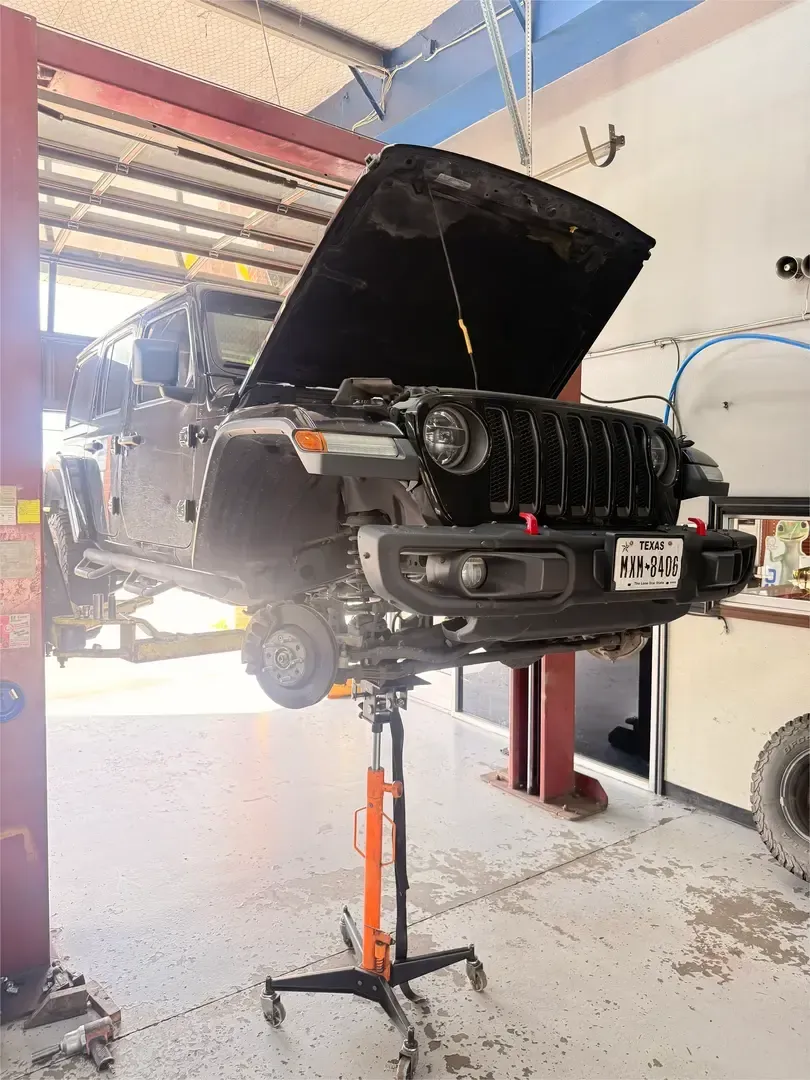
Clunking over bumps, steering pull, loose or vague steering feel, a rough or wallowing ride, and uneven tire wear can all point to suspension or steering wear. However, the symptom alone rarely identifies the exact part. A lift inspection is usually needed to confirm which component is causing the problem.
Shocks and struts usually lose damping ability over time, so the change may feel gradual at first. Simultaneously, control arm bushings can compress and crack from heat cycling and load. As wear continues, ball joints and tie rod ends may develop play, affecting steering precision and tire contact before the driver notices more than a handling change.
Genesis Auto Repair inspects the full suspension and steering assembly before recommending repairs. The team checks for play, wear, and looseness in shocks, struts, control arms, ball joints, bushings, tie rods, and steering rack components. This matters because wear in one part of the system can accelerate wear in nearby components. Worn parts are replaced to OEM specification so ride control, directional stability, and steering response are restored together rather than addressed one component at a time.
Wheel Alignment
A vehicle may be showing alignment symptoms if it pulls to one side, wanders at highway speed, or wears tire shoulders unevenly. An off-center steering wheel can also point to alignment issues. These problems can develop over time, even without a single impact or obvious event.
Toe misalignment can feather the tread across the full contact patch. Excess negative camber often loads the inner shoulder. A side-to-side caster difference can also cause a pull, even after the toe has been corrected.
Road conditions, curb strikes, and worn bushings can gradually shift alignment angles without warning. As a result, tire wear patterns are often the most reliable early sign that alignment has moved outside specification. Alignment is measured on Hunter equipment against manufacturer specification targets before any correction is made, and worn suspension components are addressed first so the corrected geometry holds.
Fleet vehicles often require more frequent alignment and tire rotation checks because accumulated mileage magnifies small geometry changes that accelerate tire wear. Businesses managing multiple vehicles may also benefit from our
fleet maintenance program.
Tire Rotation
Cupped tread, inner or outer edge wear, and tires on one axle wearing significantly faster than the other are the visible signs that rotation has been delayed too long. Front tires carry more steering and braking load, while rear tires on rear-wheel-drive vehicles handle acceleration. Without consistent rotation, that wear difference can build over time. One axle may need replacement early, even while the other still has usable tread.
On vehicles with staggered fitments, wider rear tires often cannot be rotated to the front. That makes the inspection during each rotation even more important. Wear patterns on a staggered setup should be caught early before they become harder to correct.
Each rotation includes a tread depth measurement. The team also checks for wear indicators that may point to alignment drift, inflation history, or suspension wear. These issues can shorten the life of the next set of tires. Many drivers choose to rotate their tires during scheduled oil change and preventive maintenance visits to help catch uneven wear before it shortens tire life.
Schedule a tire rotation and suspension inspection if you are experiencing these symptoms.
Shock and Strut Concerns
Worn shocks or struts can show up as excessive bounce after a dip or speed bump. You may also notice nose-dive while braking, body roll through turns, or a rough, unsettled highway ride. Cupped or scalloped tire wear can also develop when the tire loses consistent contact with the road.
Damping fluid breaks down and seals wear over time. Heat cycling in Southeast Texas can speed up that process. As a result, a vehicle that feels stable in cooler weather may feel loose or unsettled during summer highway driving.
Genesis Auto Repair inspects shocks and struts for leakage, damping response, and mount and bearing condition before recommending replacement. This is important because a worn strut mount can cause noise and vague steering, which may feel like another suspension issue. When struts are replaced, alignment should be checked afterward. Strut position directly affects camber and toe, so skipping alignment can reduce the value of the repair.
Power Steering Concerns
Heavy steering effort can point to a power steering concern, especially if it comes with whining or groaning noises. Those sounds may get worse on cold starts or when the wheel is turned fully. Fluid leaks, inconsistent assist, or jerking while steering should also be checked. The right repair path depends on whether the vehicle uses a hydraulic or electronic power steering system.
On hydraulic systems, low fluid from a slow leak at a hose, fitting, or pump seal is often the cause of increased steering effort and noise. However, if the pump is failing or the rack is worn, adding fluid alone will not resolve the problem.
On vehicles with electronic power steering, a loss of assist, warning light, or inconsistent steering at low speeds may point to a motor, sensor, or module concern. A scan for fault codes should be completed before any component is replaced.
Genesis Auto Repair confirms the source through fluid inspection, leak identification, and diagnostic scanning. From there, the team can recommend the right next step, whether that involves fluid service, hose repair, pump replacement, rack diagnosis, or electronic steering system testing.
Control Arms, Bushings, Tie Rods, and Ball Joints
Clunking over bumps or driveway transitions can point to worn steering or suspension components. The same applies if the steering wanders, requires constant correction, or feels vague and loose. Pulling under braking or inner and outer tire shoulder wear can also signal linkage wear, even without an obvious alignment event.
Rubber bushings can crack and compress from heat cycling and age. Ball joints may develop play from accumulated load and mileage, while tie rod ends wear from the constant steering inputs of daily driving. Southeast Texas heat can also speed up bushing wear faster than mileage alone might suggest.
Control arms, bushings, tie rods, and ball joints are replaced to OEM specification. After any linkage repair, alignment is verified because these components directly affect where the tires sit relative to the vehicle.
Genesis Auto Repair inspects the full linkage for play, looseness, cracked or displaced rubber, and alignment-related tire wear patterns before recommending repairs. This matters because worn bushings can affect alignment geometry much like a bent component. If the worn part is not replaced, the alignment may not hold.
Wheel Balancing and Vibration Checks
Steering wheel shake, seat vibration, and speed-sensitive shimmy can have more than one cause. The source may be tire and wheel imbalance, a bent wheel, irregular tire wear, or suspension looseness. Proper measurement is needed before any repair is recommended.
Genesis Auto Repair uses Hunter road force balancing equipment to measure imbalance and lateral force variation across the tire and wheel assembly. This helps determine whether the issue needs a balance correction, wheel repair, tire replacement, or another next step before parts are ordered. Correcting weight distribution across the assembly eliminates vibration that traces to imbalance, and the same inspection flags bent wheels or wear patterns that balancing alone cannot resolve.
Wheel Bearing Diagnosis and Replacement
A humming, grinding, or growling noise that changes pitch with vehicle speed can point to a failing wheel bearing. The concern is more likely if the sound changes when the steering wheel is turned or gets louder under load on one side of the vehicle.
Wheel bearings wear from accumulated mileage, road moisture contamination, and impact loads from potholes or curb strikes. On trucks and SUVs that regularly carry heavy loads, that wear can develop faster than mileage alone would suggest. Drivers often notice wheel bearing noise becoming more apparent on TX-35 and highway speeds where tire and road noise are otherwise consistent.
Genesis Auto Repair confirms the failed bearing through a road test to identify the noise pattern. The team also performs a lift inspection to check for play and roughness at the hub. If the wheel speed sensor is built into the hub assembly, they may also scan for ABS fault codes.
Most modern vehicles use sealed hub assemblies that are replaced as a unit rather than repacked. The bearing should be replaced before the noise progresses to wheel looseness, speed sensor faults, or stability control and ABS warnings.
Hunter Alignment and Balancing Equipment
Genesis Auto Repair uses Hunter alignment and road force balancing equipment to measure suspension geometry and wheel assembly condition with the precision these services require. Alignment angles, including toe, camber, and caster, are measured against manufacturer specifications for the specific vehicle. This avoids relying on generic tolerances and allows corrections to match the numbers the vehicle was engineered around.
Road force balancing goes beyond standard dynamic balancing by measuring lateral force variation across the tire and wheel assembly. It can identify imbalance, hard spots, and bent wheels that a standard spin balance may miss. These issues can still cause vibration and accelerate tire wear. The result is alignment and balance work that holds, protects the tire investment, and does not come back.
Suspension and Steering Warning Signs and Symptoms
Suspension and steering symptoms often show up as noise, vibration, pulling, or changes in steering feel. Genesis Auto Repair checks the full system, so the repair recommendation is based on the actual source of the problem.
Clunking or Knocking Over Bumps
Clunking over bumps can point to worn bushings, ball joints, sway bar links, or loose suspension parts. Genesis Auto Repair inspects the vehicle on the lift to confirm what is moving before recommending repair.
Steering Wheel Vibration
Steering wheel vibration may come from tire balance, bent wheels, tire wear, suspension looseness, or brake-related vibration. We check the tire, wheel, suspension, and braking systems so the cause is not guessed. If the vibration happens primarily while braking, see our brake repair and safety inspection service.
Vehicle Pulling to One Side
A vehicle that pulls or drifts may have an alignment issue, uneven tire wear, tire pressure problems, road crown sensitivity, or a brake concern. Genesis Auto Repair measures alignment angles and checks related systems before recommending repairs.
Heavy or Stiff Steering
Heavy or stiff steering can come from low power steering fluid, a failing pump, steering rack wear, linkage issues, or electronic steering faults. Genesis Auto Repair inspects the steering system and scans for stored faults when needed to confirm the right repair path.
Experiencing Any of These Symptoms?
Suspension and Steering Safety Inspection
Suspension and steering repairs directly affect vehicle control, braking stability, tire contact, and emergency handling. During a suspension and steering safety inspection, Genesis Auto Repair checks steering linkage, ball joints, control arms, bushings, shocks, and struts. The team also reviews wheel bearings, visible leaks, tire wear patterns, alignment-related symptoms, and road-test behavior when needed.
We look for looseness, uneven wear, unsafe play, damaged components, and symptoms that could affect control of the vehicle. This safety-focused inspection is especially useful before buying a used vehicle. It also helps when a vehicle has been driven on rough roads, exposed to curb impact, or showing uneven tire wear. For a broader used-vehicle review, see our pre-purchase vehicle inspection guide.
Our Services
Contact Us
Our team is here to help with fast, reliable, and professional support for all your vehicle needs.
cost overview
Our Suspension and Steering Diagnostic Process
Every suspension and steering service at Genesis Auto Repair starts with a symptom review and, when needed, a road test. We record when the symptom occurs and at what speed it appears. We also note whether it happens during braking, turning, or straight-line driving. Recent tire, brake, or suspension work is reviewed as well, since it may be related.
That information focuses the inspection before the vehicle goes on the lift. Instead of guessing from the complaint alone, our technicians inspect the systems most likely to be involved. This includes steering linkage, shocks, struts, bushings, ball joints, wheel bearings, tire condition, and alignment-related measurements. The goal is to identify the system at fault before recommending repairs.
Genesis Auto Repair confirms the issue and provides a written estimate before work begins. If a repair affects steering geometry, alignment confirmation is included in the recommendation. This helps ensure the vehicle leaves with the handling, tracking, and tire-wear correction the repair was meant to restore.
WHY CHOOSE US
Why Alvin Drivers Choose Genesis Auto Repair for Suspension and Steering
ASE-certified technicians on staff for suspension and steering inspection, diagnosis, and repair.
Hunter alignment and balancing equipment for measured corrections instead of guesswork.
RepairPal approval and Certified Auto Repair positioning as verified trust signals.
Alignment confirmation is recommended after suspension or steering component replacement when geometry may be affected.
Broad vehicle coverage for domestic trucks, Asian sedans and crossovers, and European vehicles.
Same-day service may be available depending on scheduling, parts availability, and diagnostic findings.
Early drop-off, after-hours pickup, shuttle service, online scheduling, and pickup and delivery help working families and commuters plan repairs.
Qualifying suspension and steering repairs are backed by a 12-month/12,000-mile nationwide warranty.
Our Customer Reviews
What Our Customers Say
“Mike was so incredibly helpful, informative, and most importantly to us, honest! We went to 4 different places wanting to charge us 4x the amount they charges us, simply for being honest and investing in our future business. We will NEVER go anywhere else for any vehicular needs they are able to address. :)”

“Shores Automotive is the best! I completely trust them with my car and know they’ll always be honest with me. Billy is great to work with and genuinely cares about his customers. The rest of the team is just as friendly and dependable. I wouldn’t take my car anywhere else!”

“Fantastic, hard-working and honest mechanics. They always gives VIP treatment to every customer. I take all of my cars to them for service or routine maintenance. They are fast and stand by any repairs.”

This is paragraph text. Click it or hit the Manage Text button to change the font, color, size, format, and more. To set up site-wide paragraph and title styles, go to Site Theme.
Get 10% Off Your First Visit at Genesis Auto Repair
New to Genesis Auto Repair?
Save 10% on your first visit — any service, any make or model.
FAQS
Common Questions About Suspension and Steering in Alvin
How often should I get a wheel alignment in Alvin?
Checking alignment once a year is a reasonable baseline for most vehicles in Brazoria County. The more specific triggers are tire replacement, any suspension component repair, or a hard pothole impact.
South Texas road surfaces expand and contract significantly across the summer heat cycle, which causes alignment settings to shift gradually even without a single impact event. If your vehicle is pulling to one side or showing uneven tire wear, those are signs that alignment has already drifted past an acceptable range.
Why does my car pull to one side on TX-35?
Pulling to one side on TX-35 most commonly comes from alignment drift, uneven tire pressure, or a sticking brake caliper. Alignment drift is the most frequent cause for vehicles regularly driven on Brazoria County roads, where heat cycling shifts toe settings over time.
A caliper that sticks creates pull specifically when braking rather than constant drift, which helps separate the two causes during diagnosis. We measure alignment and inspect the brake system to confirm the source before recommending a repair path.
Does a wheel alignment fix steering wheel vibration?
A wheel alignment does not usually fix steering wheel vibration. Steering wheel vibration at highway speed typically traces to wheel and tire imbalance, a bent wheel, irregular tire wear, or looseness in a suspension component, not alignment.
Alignment corrects the angles at which the tires contact the road, which addresses pulling, steering drift, and uneven tread wear. However, it does not eliminate vibration caused by weight distribution or wheel runout.
Genesis Auto Repair road tests and inspects the vehicle before recommending either service. A vehicle that pulls and vibrates often needs both alignment and balancing. Correcting alignment without addressing balance first will not resolve the vibration.
What is the difference between shocks and struts?
Shocks and struts both control vehicle body motion, but they are not interchangeable. A strut is a structural part of the suspension that also holds the coil spring. Meanwhile, a shock absorber is a separate component that does not carry suspension load.
Replacing struts requires spring compression tools, torque specs, and an alignment check afterward. We service both types on all makes and models, including full-size trucks and crossovers common across the Alvin area. For a broader overview of what ASE-certified technicians inspect during suspension service, ASE publishes consumer guidance on component standards and service expectations.
Is it safe to drive with a clunking suspension?
A clunking suspension noise usually means a component is loose or failing, most often a ball joint, control arm bushing, or sway bar end link. Driving on a worn ball joint carries a specific risk: if the joint separates completely at speed, steering control is lost immediately.
At Genesis Auto Repair, we inspect and document component condition before quoting a repair so you know exactly what is failing and why.
SCHEDULE SERVICE
Schedule Your Suspension & Steering Repair in Alvin, TX
Worn suspension components do not stay limited to ride comfort. They can accelerate tire wear, affect braking stability, and reduce the handling predictability you depend on during emergency stops, rough roads, and highway lane changes.
If your vehicle is clunking over bumps, pulling to one side, riding rough, or vibrating at speed, Genesis Auto Repair can inspect the system. The team can confirm the source, provide a written estimate, and back qualifying repairs with a 12-month/12,000-mile nationwide warranty.
Genesis Auto Repair | 2654 S Bypass 35, Alvin, TX 77511 | 281-968-7411
Call 281-968-7411, schedule online, or stop by to ask about suspension and steering service in Alvin. Genesis Auto Repair is located near the TX-35, FM 1462, and FM 2403 corridors. The shop serves drivers from Alvin, Angleton, Manvel, Liverpool, Santa Fe, and surrounding Brazoria County communities.
