
Why Your Car Keeps Blowing Fuses
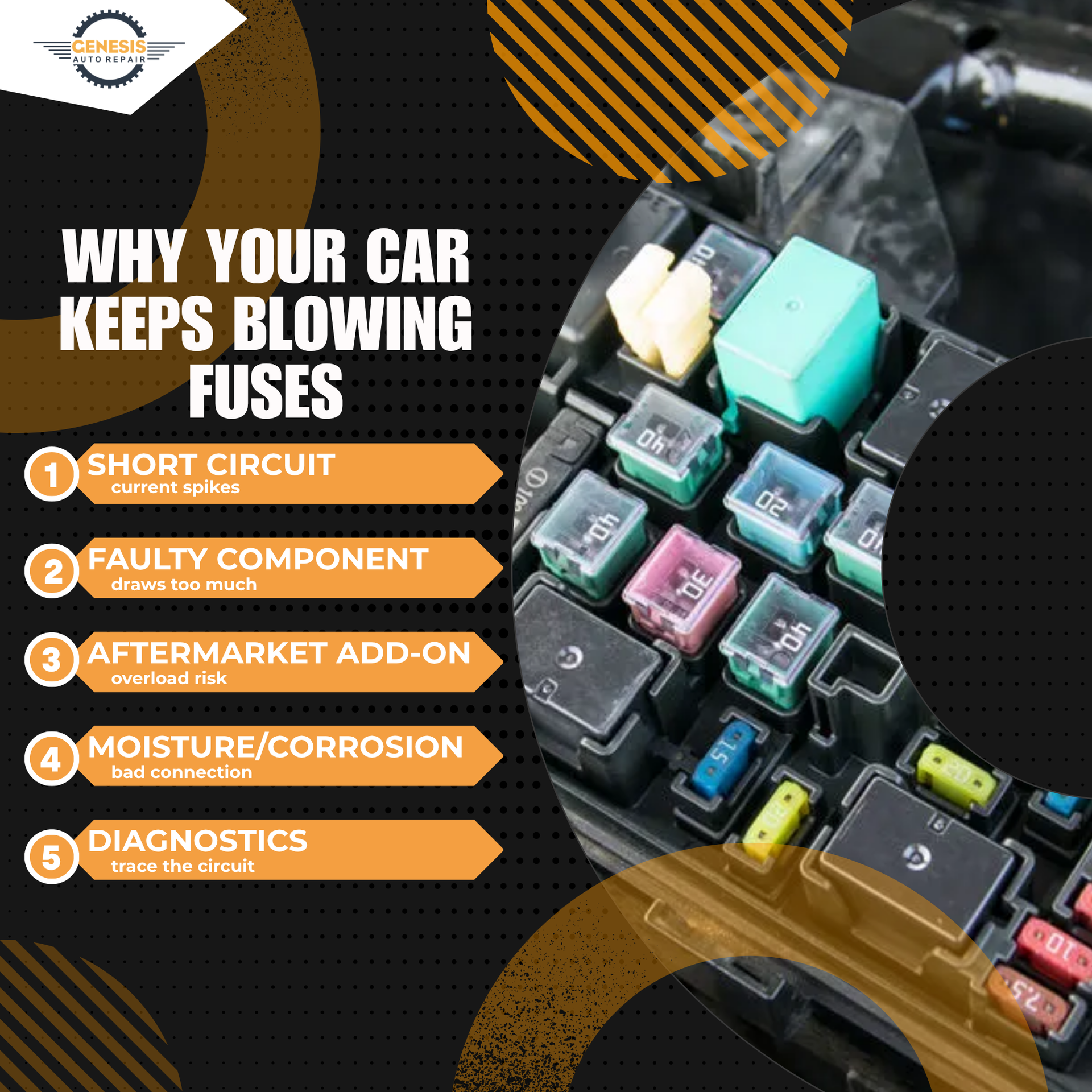
If your car keeps blowing fuses, there is likely an electrical problem sending too much current through one of the circuits. A short circuit, damaged wiring, failing component, moisture, or an overloaded aftermarket accessory can all cause the same fuse to fail repeatedly. Replacing the fuse may bring power back for a short time, but it will not fix the real issue. Scheduling auto electrical repair and service in Alvin, TX can help trace the problem properly before more parts are replaced.
Key Takeaways
A fuse protects a circuit by opening when electrical current exceeds a safe level. Repeated fuse failure often points to a short circuit, damaged wire, faulty component, moisture, or an overloaded circuit. Sudden loss of lights, power windows, accessories, or another electrical feature may be a blown car fuse symptom. Never install a fuse with a higher amperage rating than the vehicle manufacturer specifies. Car electrical diagnostics in Alvin, TX, can identify the affected circuit and the cause of repeated failures.
Why Does a Car Keep Blowing Fuses?
A car keeps blowing fuses when a circuit repeatedly draws more current than the fuse is designed to carry. The fuse is doing its job by interrupting the circuit before excess current damages wiring or components.
A Short Circuit in the Wiring
A short circuit in car wiring occurs when electricity finds an unintended path with very little resistance. A damaged wire may contact bare metal, another wire, or a grounded component and create a sudden current spike. Wire insulation can wear through from vibration, heat, sharp edges, previous repairs, or contact with moving parts. The fuse may fail immediately or only when the vehicle hits a bump, turns, or reaches a certain temperature.
A Faulty Electrical Component
An internal fault in a motor, relay, solenoid, control module, or other electrical component can draw too much current. Power-window motors, cooling fans, fuel pumps, and accessory outlets are examples of components protected by fuses. A component may normally work at first and then overload the circuit as it heats up. Testing current draw helps determine whether the component or the wiring is responsible.
An Overloaded Circuit or Aftermarket Accessory
An overloaded circuit can occur when added equipment draws more power than the original circuit can safely supply. Common examples include lighting kits, audio equipment, phone chargers, inverters, dash cameras, and improperly wired trailer accessories. Aftermarket equipment should have the correct wiring, fuse protection, and power source. Connecting high-demand accessories to an undersized circuit can cause repeated fuse failures and wiring damage.
Moisture, Corrosion, or Damaged Connections
Water intrusion and corrosion can create unwanted electrical paths or increase resistance at a connection. Fuse boxes, connectors, and wiring near doors, the windshield, the battery, or the engine compartment may be affected. Loose terminals and corroded grounds can also cause intermittent faults. These problems may appear after rain, a car wash, humid weather, or engine-bay repairs.
Blown Car Fuse Symptoms to Watch For
Blown car fuse symptoms depend on the circuit the fuse protects. One feature may stop working, or several related functions may fail simultaneously.
An Electrical Feature Stops Working
A blown fuse can cause power windows, interior lights, dashboard displays, the radio, a charging port, or another accessory to stop working. The owner’s manual can help identify which fuse protects the affected circuit. A single fuse failure may result from a temporary event. However, a replacement fuse that blows again usually means the circuit has an unresolved problem.
Lights Flicker or Power Cuts In and Out
Flickering lights or intermittent accessory operation may point to a loose connection, damaged wire, failing relay, or component that occasionally draws excessive current. An intermittent fault can be difficult to locate because it may not be active during a basic inspection. Technicians may need to move wiring, operate the affected component, review wiring diagrams, and monitor voltage or current under the conditions that trigger the problem.
A Burning Smell, Heat, or Smoke Appears
A burning odor, melted plastic, unusual heat, or smoke is an urgent electrical warning. Turn off the vehicle when it is safe to do so, move away from it, and arrange professional assistance. Do not continue replacing fuses when a circuit shows signs of overheating. Excess heat can damage nearby wiring and increase the risk of an electrical fire.
Why Replacing the Fuse Alone May Not Solve the Problem
Replacing a blown fuse restores the circuit only when the cause was temporary and no fault remains. If the same fuse opens again, repeated replacement can hide the problem without making the circuit safe.
The Fuse Is a Protective Device
A fuse is designed to be the weak point in an electrical circuit. Its metal element melts when current rises above the fuse rating, stopping power before the circuit overheats. The fuse should not be bypassed with foil, wire, or another object. A bypass removes the circuit’s protection and can allow wiring to overheat.
The Correct Fuse Rating Matters
Always use the fuse type and amperage listed in the owner’s manual or fuse-box diagram. Installing a higher-amperage fuse may let unsafe current flow through wiring that was not designed to carry it. A lower-rated fuse may blow during normal operation. If the correct fuse repeatedly fails, the circuit needs diagnosis rather than a different fuse size.
How Professional Electrical Diagnostics Find the Cause
Professional electrical diagnostics identify which part of the circuit is drawing excessive current or contacting ground. Accurate testing helps avoid replacing unrelated parts and reduces the chance of another fuse failure.
Circuit-Specific Testing
A technician may confirm the correct fuse, inspect the fuse box, review the wiring diagram, and test the affected circuit. Voltage-drop tests, resistance checks, current measurements, and controlled circuit isolation can narrow down the fault. The technician may disconnect components one at a time to determine when the excessive current stops. This process helps separate a wiring fault from a failed motor, relay, module, or accessory.
Finding Intermittent Electrical Faults
Intermittent faults may require testing while the vehicle is vibrating, warming up, or operating the affected accessory. Evidence such as melted insulation, corroded terminals, water marks, or stored fault codes can guide the inspection. Car electrical diagnostics in Alvin, TX, are especially helpful when a fuse fails only under certain driving or weather.
Can You Drive With a Blown Fuse?
Driving with a blown fuse may or may not be safe because the answer depends on the system that lost power. A fuse for a nonessential accessory is different from one protecting headlights, brake lights, wipers, engine controls, the fuel pump, ABS, or airbag-related systems.
Do Not Drive When a Safety System Is Affected
Do not drive when the blown fuse disables a system needed for safe vehicle operation. Arrange towing if the engine does not run correctly, the exterior lights are unavailable, or the wipers fail in poor weather. Towing is also recommended when a brake, steering, restraint, or fuel-system warning is present. Stop using the vehicle immediately if you notice smoke, melting plastic, or a strong electrical odor. These symptoms require inspection before the circuit is powered again.
Use the Owner’s Manual Before Replacing a Fuse
The owner’s manual or fuse-box cover can identify the fuse location, circuit, type, and amperage. Turn off the vehicle and affected accessories before removing a fuse, and follow the manufacturer’s instructions. If the replacement fuse fails, stop replacing it and schedule a diagnosis. Repeated failure confirms that the circuit still has a problem.
Schedule Auto Electrical Repair in Alvin, TX
Repeated blown fuses need more than another replacement fuse. Genesis Auto Repair can inspect the affected circuit, test wiring and components, and explain what is causing the excessive current. Schedule auto electrical repair in Alvin, TX, when the same fuse keeps failing, electrical features work intermittently, or you notice heat, smoke, or a burning smell. A circuit-level diagnosis can help restore normal operation and prevent repeat failures.
Frequently Asked Questions
Can I replace a blown fuse myself?
You may be able to replace a fuse when the owner’s manual provides clear instructions and the circuit is safe to access. Use only the specified fuse type and amperage. If the new fuse blows, stop and have the circuit diagnosed.
Why does the same fuse keep blowing?
The same fuse usually keeps blowing because the circuit still has a short, an overloaded component, damaged wiring, moisture, or an incorrectly installed accessory. The failure may happen immediately or only when a certain feature is used.
Can the wrong fuse damage my car?
Yes, the wrong fuse can damage your car. A fuse with a higher amperage rating may allow wiring or components to overheat before the fuse opens. A lower-rated fuse may fail during normal operation even when the circuit is working correctly.
Should car fuses be checked regularly?
Fuses are not normally replaced on a routine maintenance schedule. Check them when an electrical feature stops working or when the owner’s manual recommends an inspection. Repeated failures require diagnosis rather than scheduled fuse replacement.
How much does electrical diagnosis cost?
The cost of an electrical diagnosis depends on the circuit, the time needed to reproduce the fault, and the repairs required. Intermittent wiring problems may take longer to locate than a visibly damaged connector or failed component. A repair shop can provide an estimate after an initial inspection.
Get Repeated Fuse Failures Checked
A fuse that fails once may be an isolated event, but a fuse that keeps blowing signals an unresolved electrical problem. Continuing to replace it can leave the vehicle without an important system and may allow damage to worsen. Contact Genesis Auto Repair for car electrical diagnostics and auto electrical repair in Alvin, TX. Proper testing can identify the affected wire, connection, accessory, or component and provide a repair based on the actual cause.