
Oil Leak After an Oil Change: What It Means
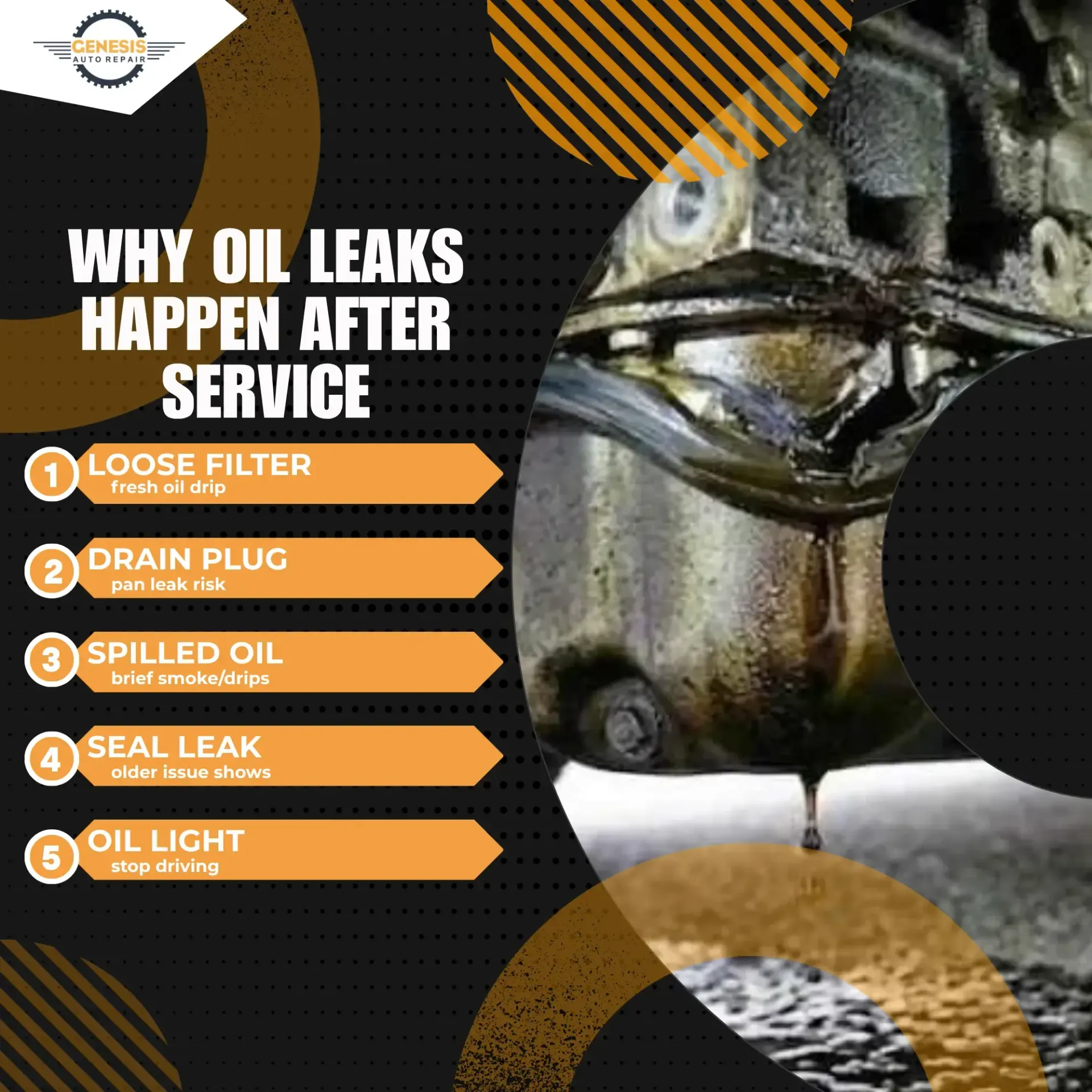
An oil leak after an oil change can happen for several reasons. Common causes include a loose oil filter, a drain plug problem, spilled oil, or an existing seal leak that became more noticeable after service. A few drops may simply be leftover oil burning off or dripping from a splash shield. However, a growing puddle, repeated dripping, a burning smell, an oil-pressure warning, or a dropping dipstick level should be checked right away. Scheduling oil change and preventive maintenance in Alvin, TX, can help confirm the source of the leak and protect your engine from low-oil damage.
Key Takeaways
A loose or incorrectly installed oil filter is a common cause of a fresh leak after service. A damaged drain plug, missing sealing washer, or improperly tightened plug can also allow oil to escape. Residual oil from the service may drip briefly, but repeated spots or a dropping oil level usually indicate an active leak. Stop the engine when the oil-pressure warning light appears, the engine becomes noisy, or oil is leaking rapidly. An inspection can confirm whether the problem is related to the recent oil change or a separate engine gasket or seal.
Why Is Your Car Leaking Oil After an Oil Change?
A post-service oil leak usually comes from the oil filter, drain plug, sealing washer, or oil that was spilled during the service. It may also reveal an older gasket or seal leak that was already developing.
A Loose or Incorrectly Installed Oil Filter
An oil filter must seat evenly against a clean mounting surface. If it is loose, cross-threaded, damaged, or fitted with the wrong gasket, oil can leak around the filter as the engine runs. A double-gasket condition can also cause a serious leak. This happens when the old filter gasket sticks to the engine and the new filter is installed over it, preventing a proper seal.
A Drain Plug or Sealing Washer Problem
The drain plug seals the opening used to remove old oil. A loose plug, damaged threads, or a worn or missing washer can allow fresh oil to drip from the oil pan. Overtightening can also damage the plug, washer, or oil-pan threads. The correct tightening procedure depends on the vehicle, so the plug should be installed to the manufacturer’s specification.
Residual Oil From the Service
Oil may spill onto the engine, subframe, or splash shield while the filter is removed or the engine is refilled. That oil can drip onto the ground after the vehicle leaves the shop, even when the filter and drain plug are sealed correctly. Residual oil should decrease after the affected area is cleaned. Continued dripping, new oil around a service point, or a lower dipstick reading indicates that the source needs another inspection.
An Existing Gasket or Seal Leak
Not every leak that appears after service was caused by the oil change. Valve cover gaskets, oil-pan gaskets, crankshaft seals, oil cooler seals, and other components can begin leaking as they age. Fresh oil and a clean engine area may make an older leak easier to notice. A technician may need to clean the area and trace the leak before recommending engine oil leak repair in Alvin, TX.
Loose Oil Filter Symptoms to Watch For
Loose oil filter symptoms can range from a small drip to rapid oil loss. The severity depends on how poorly the filter is sealed and how long the engine has been running. Fresh oil around the filter housing or on nearby engine components. Oil spots or a growing puddle beneath the engine area. A burning oil smell when leaking oil reaches a hot exhaust component. An oil-pressure warning light or low-oil message on the dashboard. A dipstick level that drops soon after the oil change. New tapping, ticking, or knocking sounds that may occur when oil pressure or oil level is too low. Do not continue running the engine when the oil-pressure warning stays on or the engine develops unusual mechanical noise. Shut the engine off in a safe location and arrange for professional assistance.
How to Confirm the Leak Is Engine Oil
Engine oil is usually amber when new and dark brown or black after use. It feels slick between your fingers and often appears beneath the engine, oil pan, filter area, or front portion of the vehicle.
Check the Ground and Engine Area Safely
Park on a level surface, turn off the engine, and allow hot components to cool before looking around the vehicle. Note the location, color, amount, and pattern of the fluid without reaching near hot or moving parts. A clean piece of cardboard placed beneath the parked vehicle can help show where the drip lands. The landing point is only a clue because airflow and splash shields can move fluid away from the actual source.
Compare the Fluid With Other Vehicle Fluids
Coolant is often watery and may be green, orange, pink, or another color. Transmission fluid may be red or brown, while clear water near the passenger side can be normal air-conditioning condensation. Color alone does not always identify a fluid because age and contamination can change its appearance. A professional inspection is the safest way to confirm the source when the fluid is unclear.
Monitor the Oil Level
Check the dipstick according to the procedure in the owner’s manual. The vehicle usually needs to be parked on level ground with the engine off for a specified amount of time before the reading is accurate. A level below the safe range means the engine may not have sufficient oil. Use only the correct oil type and procedure listed for the vehicle, or arrange for service if you are unsure.
What an Oil Leak Can Indicate for Your Engine
An active oil leak can reduce the amount of lubricant available to the engine. Low oil can increase friction, heat, and wear between internal parts, especially when the vehicle is driven for an extended period.
Low Oil Can Cause Rapid Damage
Engine oil creates a protective film between moving parts and helps carry heat and contaminants away from critical surfaces. When the level or pressure becomes too low, bearings, camshafts, timing components, and other parts may wear quickly. The oil-pressure warning light requires immediate attention because it may indicate that oil is not circulating correctly. Continuing to drive can turn a service-related leak into major engine damage.
Leaking Oil Can Reach Hot Components
Oil that reaches the exhaust manifold or another hot surface can create smoke and a burning smell. It may also damage rubber parts, collect dirt, or spread across the underbody. Visible smoke or a strong burning odor should not be ignored. Pull over safely, shut off the engine, and have the vehicle inspected before driving farther.
What to Do If Oil Starts Leaking After Service
Contact the shop that performed the service and explain when the leak started, where the oil appears, and whether any warning lights or noises are present. Photos of the spots and the dipstick reading may help the shop understand the situation before the vehicle returns.
Decide Whether the Vehicle Is Safe to Move
A few residual drops may not require towing if the oil level is normal and no warning lights are on. However, the vehicle should still be inspected if the dripping continues. Avoid unnecessary driving until the source is confirmed. Do not drive if oil is pouring out or a large puddle forms quickly. Stop driving if the oil level falls below the safe range. The same applies if the oil-pressure warning appears or the engine starts making unusual noises. Arrange for towing or roadside assistance instead.
Do Not Rely on Repeated Top-Offs
Adding oil may temporarily restore the level, but it does not repair the leak. Repeatedly topping off the engine can also hide how quickly oil is escaping and delay the diagnosis of a loose filter, damaged plug, or failed gasket. The correct repair depends on the leak source. The vehicle may need a filter or washer replaced, a drain-plug problem corrected, or a separate gasket or seal repaired.
How to Prevent Oil Leaks After Future Oil Changes
Careful installation and a final leak check reduce the chance of a post-service oil leak. The filter, drain plug, washer, oil type, and fill quantity must match the vehicle’s specifications. Use the correct oil filter and confirm that the old gasket was removed. Clean the filter mounting surface before installing the replacement filter. Replace the drain-plug washer when the vehicle manufacturer requires it. Tighten the filter and drain plug according to the proper procedure and specification. Fill the engine with the correct oil type and quantity. Run the engine, inspect for leaks, shut it off, and verify the oil level again. Clean any spilled oil so future drips are easier to identify. Choosing a shop that follows a consistent inspection process can also help prevent repeat problems. After an oil change in Alvin, TX, ask the service team to explain any active leaks or worn seals they noticed during the visit.
Schedule an Oil Leak Inspection in Alvin, TX
A leak that begins after an oil change should be inspected before it lowers the oil level or damages the engine. Genesis Auto Repair can check the filter, drain plug, oil pan, gaskets, seals, and surrounding areas to identify the source. Contact Genesis Auto Repair to schedule an oil leak inspection, oil change, or engine oil leak repair in Alvin, TX. The inspection can determine whether the leak is related to the recent service or a separate engine issue.
Frequently Asked Questions
Can residual oil drip after an oil change?
Yes, residual oil can drip after an oil change. Oil spilled onto a splash shield, subframe, or engine surface may drip after the service. The dripping should decrease after the area is cleaned, while continued dripping or a falling oil level suggests an active leak.
Can an oil leak affect my car’s performance?
Yes, an oil leak can affect your car’s performance. A significant leak can lower the oil level or oil pressure and increase friction inside the engine. The vehicle may also develop warning lights, unusual noises, smoke, or a burning smell.
How often should I check the engine oil level?
Follow the interval and procedure in the owner’s manual when checking the engine oil level. Many drivers also check the level monthly, before a long trip, and after service when a leak is suspected.
Can a loose oil filter damage the engine?
Yes, a loose oil filter can damage the engine. A loose filter can allow sufficient oil to escape that the engine loses lubrication or oil pressure. Shut off the engine if the oil-pressure warning appears or the engine develops unusual noise.
Can I drive with an oil leak?
Driving may be unsafe when the leak is rapid, the oil level is low, the oil-pressure light is on, smoke is present, or the engine sounds abnormal. A small leak still needs inspection because its severity can change and the oil level can continue to fall.
Conclusion
An oil leak after an oil change may come from a loose filter, a drain plug or washer problem, spilled oil, or an unrelated gasket or seal. Checking the oil level and having the source inspected promptly can help prevent low oil pressure and engine damage. If your car is leaking oil after service, contact Genesis Auto Repair for an inspection in Alvin, TX. Stop driving and arrange for assistance when the oil-pressure warning appears, the leak is rapid, or the engine develops unusual noise.